Salmon Poisoning in Dogs

One of the diseases that is unique to the Pacific Northwest is salmon poisoning. While the name of this disease implies that the problem is bad salmon, it is actually a disease caused by a small microscopic organism and a fluke. Through a complicated life cycle, a rickettsial organism located within the immature form of a fluke colonizes the flesh of salmon. If raw fish are ingested by dogs, the fluke will mature within the intestine and release the rickettsial organism that then causes most of the clinical symptoms of the disease. Ingestion may be of dead salmon or little bits of salmon on a beach, from a fishing boat, next to a creek or near a lake. In other cases, dogs find fish carcasses or skin in the garbage. While the disease is called salmon poisoning, it can also be seen in dogs who eat steelhead trout.
Symptoms don’t occur right after ingestion of raw infected fish. It usually takes 5-7 days after ingestion to see fever, vomiting, diarrhea (sometimes with blood), loss of appetite, and weakness. Both the lymph nodes under the skin and the internal abdominal lymph nodes will often become enlarged.
Diagnosis
Fluke eggs found on a fecal exam confirm the diagnosis of salmon poisoning.
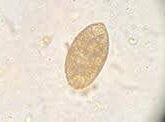
Unfortunately, in many dogs, the fluke eggs are only shed episodically so it might take 4 to 5 fecal samples to find them. This is why a thorough history discussing any possible exposure is so important. In addition, the disease should be suspected if there is a combination of fever, bigger than normal lymph nodes with diarrhea. Bloodwork and imaging can also help. Often low platelets are seen on a complete blood count. Large internal lymph nodes on ultrasound should also raise suspicion. In cases where fecal tests are negative but the disease is suspected, the microscopic organism can be found in needle aspirates from enlarged lymph nodes.
Salmon poisoning in dogs can be deadly if it is untreated. Luckily, the prognosis is very good when appropriate treatment is instituted. Treatment involves IV fluids, anti-nausea medications, antibiotics (doxycycline), and an anti-parasitic agent to specifically kill the flukes. In very sick dogs, plasma transfusions and nutritional support with feeding tubes may be needed. Most dogs treated appropriately recover fully.
Prevention
The only way to prevent this disease is to avoid exposure to dead salmon. If fishing with your dog, make sure they do not have access to fish carcasses or trimming. Keep dogs out of streams or creeks where salmon are spawning. Always make sure garbage cans are in closed cabinets or have a tight-fitting lid.
Not all dead fish or raw salmon carry the organism so not every dog who eats dead fish needs to be seen. However, if they do and develop clinical signs 5-7 days later, early evaluation and treatment can avoid severe illness.
If your dog has eaten raw or dead fish and begins showing signs such as fever, vomiting, diarrhea, or swollen lymph nodes, don’t wait to see if it passes. Early treatment makes all the difference in recovery from salmon poisoning. Call Timberline Veterinary Emergency & Specialty in Seattle at 206-828-6868 right away for expert care.
Recent Posts
About Us
Timberline Veterinary Emergency & Specialty is a locally owned, veterinarian-led hospital founded in 2023 by Dr. Laura Ahlgrim, Dr. Beth Davidow, and Dr. Chris Bailey. As Seattle residents, we understand that pets are family—and when emergencies arise, you need care you can trust. Our mission is to provide exceptional emergency and specialty services with compassion, transparency, and medical excellence. We're here to support your pet’s health while fostering a stronger, kinder veterinary community.